
the immediate resignation of the Union Education Minister.Dharmendra PradhanFor millions of young people in India, the path to a stable future lies through a single gate: competitive examinations. Whether it is securing a seat in a medical college through NEET-UG, earning a central university slot via CUET, or clearing the foundational CBSE board exams, these tests are treated as sacred milestones.Today, that sanctity lies in ruins.Following a relentless barrage of paper leaks, systemic malfunctions, and evaluation scandals, India’s student community has reached a breaking point. At the center of this storm is Union Education Minister Dharmendra Pradhan. Across the country, student unions like the Students’ Federation of India (SFI), opposition leaders, and everyday citizens are united under a single, non-negotiable demand: the immediate resignation of the Union Education MinisterThe anger boiling over on the streets and across social media is not a reaction to a single isolated mishap. It is the culmination of what many are calling a total collapse of India’s national examination infrastructure.A change in leadership may not instantly fix the deep-seated flaws in how India conducts its exams, but it is a necessary first step. It sends a message that those in power cannot oversee the structural collapse of our students’ futures without facing consequences. Until accountability is claimed at the top, the cries for justice on the streets will only grow louder.The bedrock of any meritocratic nation is its examination system. For millions of students across India, standardized national evaluations represent a golden ticket—a hard-earned pathway out of economic hardship and into professional excellence. However, the integrity of this pathway has suffered a massive, unprecedented breakdown. Across the length and breadth of the country, intense student protests, legal battles, and street demonstrations have erupted with a unified, echoing cry. The primary demand of the protest is the immediate resignation of Union Education Minister Dharmendra Pradhan following major controversies and paper leak scandals surrounding national exams like NEET-UG, CBSE, and CUET.
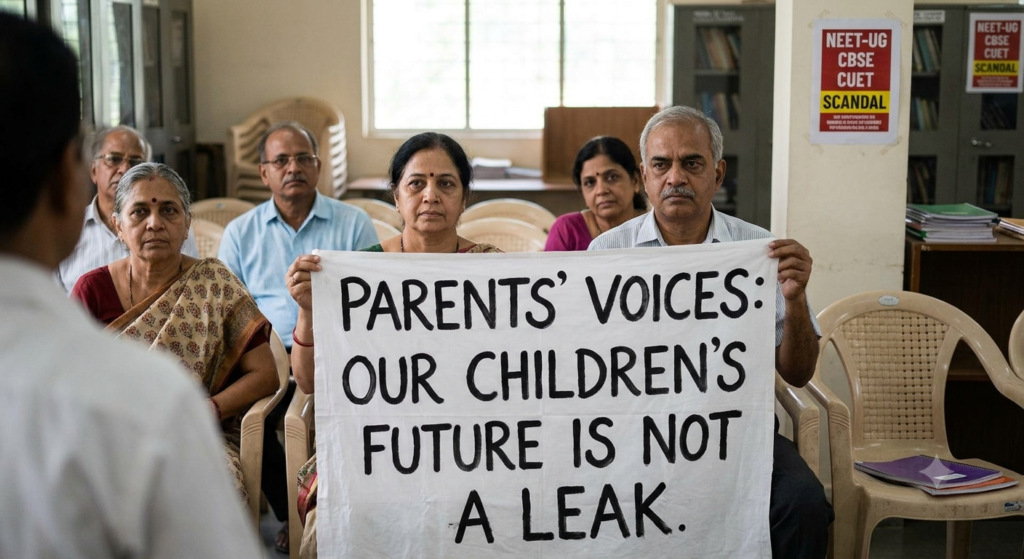
1. The NEET-UG Debacle: Dreams on Hold
The National Eligibility-cum-Entrance Test (NEET-UG) has become synonymous with structural failure. With the recent cancellation and repeated leaks surrounding the exam, lakhs of medical aspirants have seen months—sometimes years—of grueling preparation evaporate overnight. When the very agency designed to secure these papers fails to do so, the psychological toll on students is immeasurable.
2. The CBSE OSM Scandal: Automated Errors
The crisis isn’t limited to entry-level college exams. The Central Board of Secondary Education (CBSE) faced intense backlash over its On-Screen Marking (OSM) evaluation system. Plagued by critical flaws and cybersecurity vulnerabilities, the platform left the future of Class 12 and 10 students hanging by a thread, drawing sharp criticism from ethical hackers and educators alike before being abruptly altered.Dharmendra Pradhan
3. CUET and UGC-NET: Chronic Postponements
The Common University Entrance Test (CUET) and UGC-NET have faced a continuous cycle of paper leaks, technical glitches, and sudden cancellations. For a system that promises a streamlined transition into higher education, it has instead delivered a chaotic, anxiety-inducing lottery.A change in leadership may not instantly fix the deep-seated flaws in how India conducts its exams, but it is a necessary first step. It sends a message that those in power cannot oversee the structural collapse of our students’ futures without facing consequences. Until accountability is claimed at the top, the cries for justice on the streets will only grow louder.The bedrock of any meritocratic nation is its examination system. For millions of students across India, standardized national evaluations represent a golden ticket—a hard-earned pathway out of economic hardship and into professional excellence. However, the integrity of this pathway has suffered a massive, unprecedented breakdown. Across the length and breadth of the country, intense student protests, legal battles, and street demonstrations have erupted with a unified, echoing cry. The primary demand of the protest is the immediate resignation of Union Education Minister Dharmendra Pradhan following major controversies and paper leak scandals surrounding national exams like NEET-UG, CBSE, and CUET.
Why the Target is the Education Minister
Whenever an exam leaks, the immediate reaction of the administration has historically been to shield top leadership. Defenses usually shift blame to the National Testing Agency (NTA) or local tech vendors, offering standard platitudes that “student interests remain paramount.”Dharmendra Pradhan
However, protesters argue that accountability must stop at the top.
“The National Testing Agency (NTA) has been perceived as a ‘National Torturing Agency’ by crores of students across the nation today. The credibility of the entire examination system has collapsed.”
— Extract from SFI Campaign Statement
Dharmendra Pradhan has held the portfolio since July 2021. Detractors point out that despite repeated promises over the years to build a “foolproof” system, the frequency of leaks and evaluation blunders has only amplified. Critics argue that the ministry has treated education administration as a secondary concern to political maneuvering and election management, leaving the futures of India’s youth compromised.Dharmendra Pradhan has held the portfolio since July 2021. Detractors point out that despite repeated promises over the years to build a “foolproof” system, the frequency of leaks and evaluation blunders has only amplified. Critics argue that the ministry has treated education administration as a secondary concern to political maneuvering and election management, leaving the futures of India’s youth compromised.Dharmendra Pradhan
The Scale of the Protest
This is no longer a localized issue discussed only in coaching hubs like Kota or Mukherjee Nagar. It has transformed into a national movement:
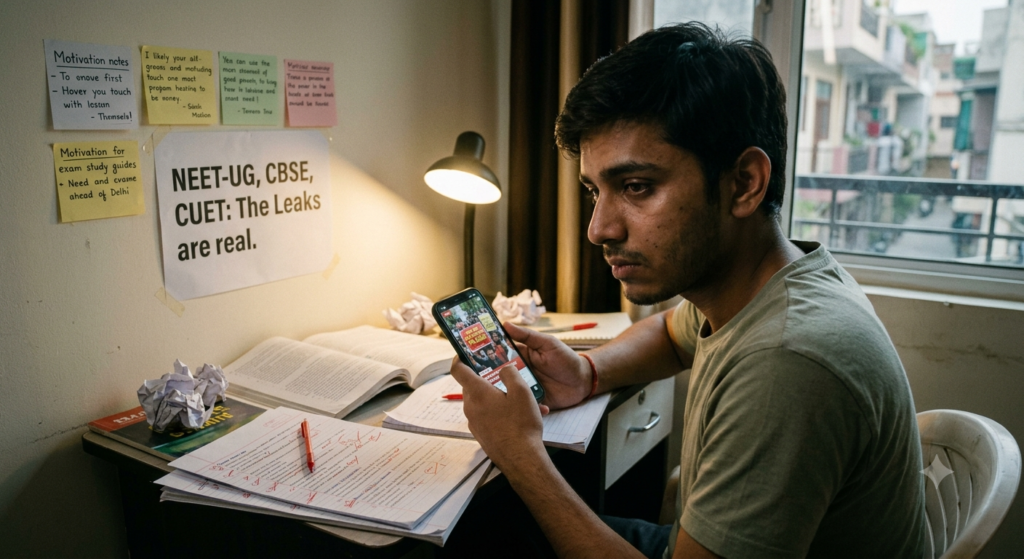
- Massive Signature Campaigns: Student bodies have launched nationwide campaigns, collecting tens of thousands of signatures both online and offline, aiming to march directly to the Ministry of Education.
- Political Pressure: Major opposition parties have fiercely condemned the ministry, labeling the ongoing continuation of the minister in office as a blatant disregard for administrative integrity.
- On-the-Ground Protests: Ongoing rallies and demonstrations are demanding not just the resignation of the minister, but the complete dismantling and restructuring of the NTA.
Final Thoughts: Beyond One Resignation
While forcing a ministerial resignation is the primary demand, the underlying crisis runs much deeper. It is about a systemic loss of faith. When hard work, merit, and sleepless nights are routinely defeated by corruption, paper-leak mafias, and technological incompetence, the democratic promise of equal opportunity dies.
A change in leadership may not instantly fix the deep-seated flaws in how India conducts its exams, but it is a necessary first step. It sends a message that those in power cannot oversee the structural collapse of our students’ futures without facing consequences.Dharmendra Pradhan Until accountability is claimed at the top, the cries for justice on the streets will only grow louder.The bedrock of any meritocratic nation is its examination system. For millions of students across India, standardized national evaluations represent a golden ticket—a hard-earned pathway out of economic hardship and into professional excellence. However, the integrity of this pathway has suffered a massive, unprecedented breakdown. Across the length and breadth of the country, intense student protests, legal battles, and street demonstrations have erupted with a unified, echoing cry. The primary demand of the protest is the immediate resignation of Union Education Minister Dharmendra Pradhan following major controversies and paper leak scandals surrounding national exams like NEET-UG, CBSE, and CUET.
When the institutional machinery tasked with protecting student futures repeatedly fails, responsibility cannot simply be shifted down to lower-level functionaries or private digital contractors.Dharmendra Pradhan Accountability must be established at the absolute apex of leadership. In the wake of historic security breaches, widespread technical failures, and system-wide mismanagement, citizens are questioning the competence of the Ministry of Education. The demand for Minister Dharmendra Pradhan resignation is not merely a political knee-jerk reaction; it is a manifestation of collective heartbreak, deep-seated anger, and absolute exhaustion from a student community pushed to the brink.
The Anatomy of a Systemic Failure
To understand why the public outrage has targeted the Union Education Minister so fiercely, one must examine the triad of academic evaluation systems that have unraveled under his watch. The simultaneous collapse of security and operational protocols across NEET-UG, CBSE, and CUET has left virtually no student demographic untouched. Whether an adolescent is finishing their schooling, attempting to enter a prestigious central university, or fighting for a coveted seat in a government medical college, the system has thrown major structural hurdles in their path.
| Examination Category | Core Administrative Issue Impacting Students | Current Public Status / Investigation |
| Medical Entrance | Widespread paper leaks, compromised command chain, sudden nationwide exam cancellation. | Transferred to CBI; Nationwide re-examination forced upon 22 lakh aspirants. |
| Secondary Schooling | Vulnerabilities in the newly introduced On-Screen Marking (OSM) evaluation portal. | Massive protests by student bodies over result discrepancies and lack of statutory audits. |
| University Admissions | Technical glitches, portal crashes, constant schedule disruptions, and cancellations. | Widespread academic delays across major central and state universities. |
The compounding nature of these crises proves that these are not isolated administrative slip-ups. They are systemic failures. When the structural integrity of NEET-UG, CBSE, and CUET breaks down all at once, it exposes a deep-seated vulnerability in how India’s centralized testing infrastructure is governed.
The Crisis Impacting Medical Aspirants
The most prominent flashpoint in this nationwide agitation stems from the absolute disaster surrounding the medical entrance framework. For years, the single-window entrance exam has been the sole gatekeeper for medical seats across India. Millions of students sacrifice years of comfort, family time, and financial resources to prepare for this highly competitive test.Dharmendra PradhanYet, the recent cycle turned into an absolute nightmare when evidence of a massive, coordinated paper leak mafia surfaced.Dharmendra Pradhan
The security breach was so severe that the ministry had no choice but to cancel the initial test, plunging over 22 lakh aspirants into a state of profound psychological distress. The compromised state of NEET-UG, CBSE, and CUET indicates that specialized criminal syndicates have managed to bypass the secure distribution channels of our nation’s testing agencies.
Though Minister Dharmendra Pradhan eventually acknowledged a “breach in the command chain” and ordered a Central Bureau of Investigation (CBI) probe, critics point out that these reactions came far too late. Dharmendra PradhanThe initial stance of the ministry was one of denial—a defensive posture that further alienated students who had clear evidence of irregularities. Forcing 22 lakh young citizens to undergo the intense stress of a re-examination because the government failed to secure a question paper is an administrative failure of historic proportions.
Secondary Education and Board-Level Discrepancies
The crisis is not restricted to post-school competitive entry points alone. The foundational layer of secondary and senior secondary education has also been hit by controversies. The introduction of modern digital infrastructure was supposed to make evaluation error-free and transparent. Instead, changes made to the evaluation mechanisms within the board framework have drawn severe flak.Dharmendra Pradhan
Student organizations like the Students’ Federation of India (SFI) and various teacher associations have flagged serious vulnerabilities in the On-Screen Marking (OSM) system implemented for board evaluations.Dharmendra Pradhan Reports have emerged detailing how these digital portals are susceptible to external tampering, leading to bizarre anomalies in final marks.
The anxiety of a student experiencing the broken pipeline of NEET-UG, CBSE, and CUET begins at the school level. When a student cannot trust that their board exam papers are being evaluated fairly and securely, their faith in the entire academic hierarchy is shattered. The ministry’s failure to conduct rigorous, independent, and statutory audits of these new digital marking systems before rolling them out on a massive scale highlights a reckless approach toward educational policy execution.
The Chaos Grinding Higher Education to a Halt
Compounding the misery of school board candidates and medical hopefuls is the severe administrative mismanagement plaguing general university admissions. Introduced to standardize admissions into central universities, the common entrance test was marketed as a revolutionary step to relieve students from the pressure of cut-throat cut-off percentages. Instead, it has morphed into an erratic, unpredictable logistical nightmare.Dharmendra Pradhan