
In May 2026, the Indian digital landscape witnessed an unprecedented phenomenon. An overnight satirical political movement erupted, exploding across Instagram, X (formerly Twitter), and messaging platforms, quickly amassing tens of millions of followers. This movement came to be known as the Cockroach Janta Party (CJP). For political analysts, historians, and everyday citizens tracing this meteoric rise, one central question continues to dominate headlines: Why is It Called Cockroach Janta Party?
The answer lies at the intersection of extreme generational frustration, an economic crisis marked by rampant unemployment, and an unexpected verbal spark from the highest judicial office in India. To truly understand Why is It Called Cockroach Janta Party, one must look closely at a single courtroom exchange that turned an intended insult into a massive, resilient symbol of youth defiance.
The Spark: A Judicial Comment and an Overnight Backlash
On May 15, 2026, the Supreme Court of India was presiding over a hearing concerning legal and activist frameworks. During the open court proceedings, oral observations were made that sent shockwaves through the nation. The commentary noted that there are youngsters “like cockroaches” who, failing to secure traditional employment, resort to social media activism and independent journalism to attack established systems, characterizing them as “parasites of society.”
For a generation already battling an intensely competitive job market and widespread underemployment, these words felt like a crushing systemic betrayal. Instead of suffering in silence, the youth fought back using the most potent weapon in the digital age: satire.
The very next day, May 16, 2026, political communications strategist Abhijeet Dipke launched a parody political handle online. When curious internet users stumbled upon this viral entity and asked, “Why is It Called Cockroach Janta Party?”, the reason was plain: it was a direct, unapologetic reclamation of the courtroom’s dehumanizing metaphor.
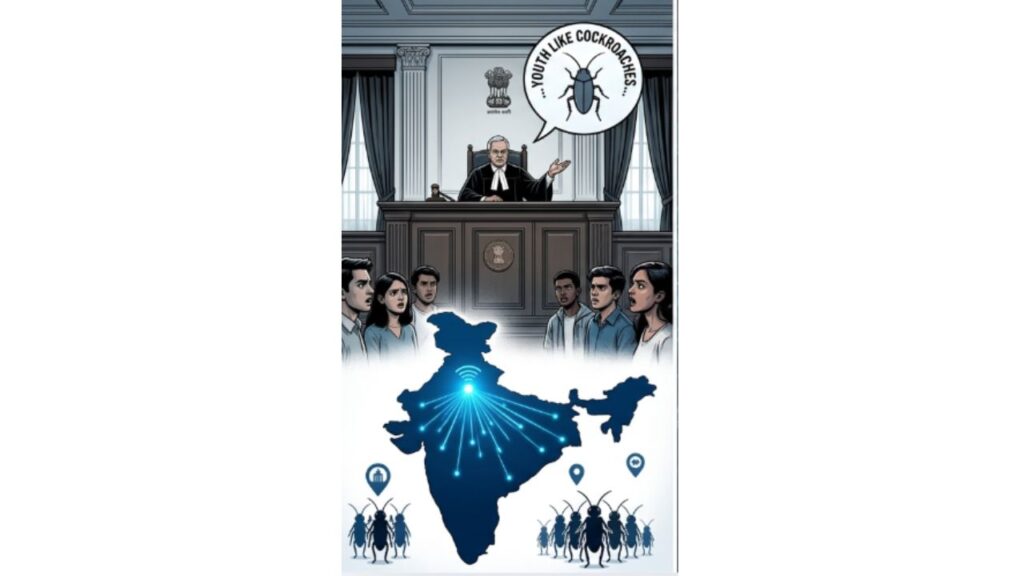
Deconstructing the Name: Humor, Pain, and Political Parody
The naming of this movement was an act of deliberate, multilayered irony. If you are wondering Why is It Called Cockroach Janta Party, the nomenclature serves two distinct purposes:
- Reclaiming the Insult: By adopting the moniker of an insect widely regarded as a pest, India’s youth decided to flip the narrative. If the establishment viewed unemployed youth and accountability-seeking activists as pests, then they would embrace that identity collectively.
- A Parody of the Establishment: The phrase “Janta Party” (People’s Party) is a direct, satirical nod to the traditional political nomenclature of India, mocking the heavy-handed nature of mainstream political setups.
When analyzing the phrase piece by piece, it becomes obvious Why is It Called Cockroach Janta Party. It acts as a mirror held up to power, transforming structural contempt into a highly coordinated push for institutional accountability.
The Underlying Socio-Economic Trigger: More Than Just a Joke
While the initial virality was fueled by memes, the rapid growth of the movement proved that it was anchored in profound, real-world pain. To ask Why is It Called Cockroach Janta Party is to ask why millions of educated young individuals feel completely alienated by mainstream economic systems.
1. The Unemployment and Gig-Economy Crisis
India’s Gen Z and millennial demographics face an uphill battle. Despite draining family savings to pay for higher education, stable, high-paying jobs remain remarkably scarce. Millions are pushed into precarious gig work, delivery jobs, or underpaid contractual roles.
2. Academic Discontent
The controversy occurred against a backdrop of deep student anxiety regarding national competitive exams. When the youth demanded better systems and transparency, the response they perceived from high authorities was met with indifference—and eventually, the “cockroach” comparison.
This specific combination of systemic failures explains Why is It Called Cockroach Janta Party. It represents a break in the cycle of silent frustration for a demographic that feels invisible to policymakers.
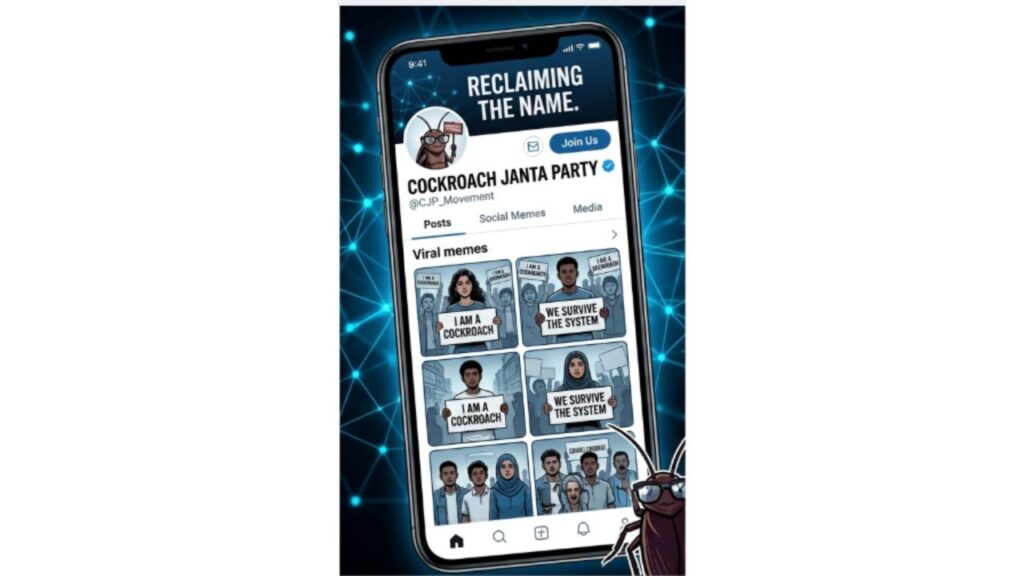
The Anatomy of the CJP: Ideology and Mock Manifesto
The CJP’s official digital platform describes itself with an edgy, self-deprecating humor designed to appeal directly to digital natives. Their self-declared ideological pillar reads: “A political front of the youth, by the youth, for the youth: Secular, Socialist, Democratic, and Lazy.”
To gain a clearer understanding of Why is It Called Cockroach Janta Party, one can look at their highly satirical four-point eligibility criteria for membership:
- Must be unemployed or underemployed.
- Must be inherently lazy.
- Must be chronically online.
- Must possess the ability to “rant professionally.”
Behind this humorous facade lies a serious critique of governance. The movement’s actual messaging targets serious democratic reforms, including absolute judicial independence, strict penalties for political corruption, and better gender representation. This contrast between surface-level satire and deep institutional critique is exactly Why is It Called Cockroach Janta Party.
Digital Explosion: Outpacing Global Icons
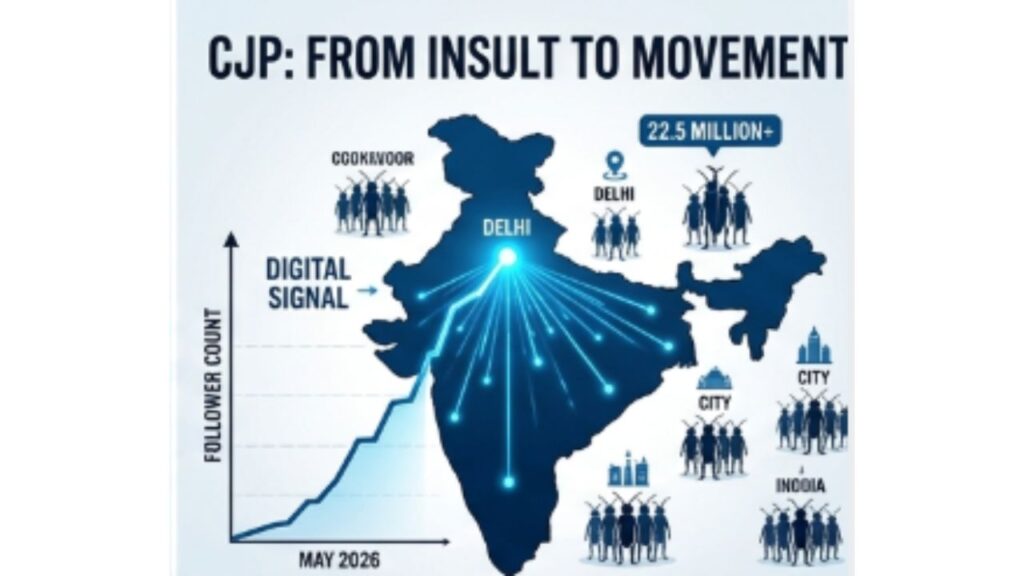
The speed at which the movement grew left traditional political parties stunned. Within just four days of its inception, the movement amassed over 10 million followers on Instagram. Within a month, the platform swelled to over 22.5 million followers—surpassing the official social media handles of major established political parties.Why is It Called Cockroach Janta Party
| Metric / Aspect | Details of the CJP Movement |
| Founder | Abhijeet Dipke (Digital Communications Strategist) |
| Launch Date | May 16, 2026 |
| Peak Instagram Following | 22.5 Million+ |
| Core Target Audience | Indian Gen Z, Unemployed Youth, and Students |
| Key Issues Addressed | Educational Systems, Unemployment, Institutional Deficits |
When global media outlets scrambled to cover this internet phenomenon, their primary inquiry was, “Why is It Called Cockroach Janta Party?” Journalists quickly discovered that the insect metaphor perfectly captured the core strength of the demographic: resilience. As supporters frequently noted, cockroaches are famously capable of surviving extreme disasters; similarly, India’s youth intend to survive an economic environment that feels designed to neglect them.
The Crackdown and Transition to the Streets
As the movement transitioned from a digital joke to an influential pressure group, the establishment’s response grew increasingly hostile, leading to restrictions on their primary social media accounts.
These heavy-handed actions only led more people to investigate the movement. The censorship drove millions of curious onlookers to ask, “Why is It Called Cockroach Janta Party, and why is the state so afraid of a parody?” Denied access to traditional social media avenues, the movement adapted seamlessly, shifting its operations to decentralized networks like WhatsApp channels, Telegram, and Discord servers.
By June 2026, the Cockroach Janta Party attempted its most challenging feat: moving from the digital realm onto the streets, organizing peaceful, non-violent rallies across multiple cities to demand educational reforms and accountability. For observers wondering Why is It Called Cockroach Janta Party, it became clear that the movement was no longer just an online meme space—it had evolved into a physical manifestation of youth dissent.
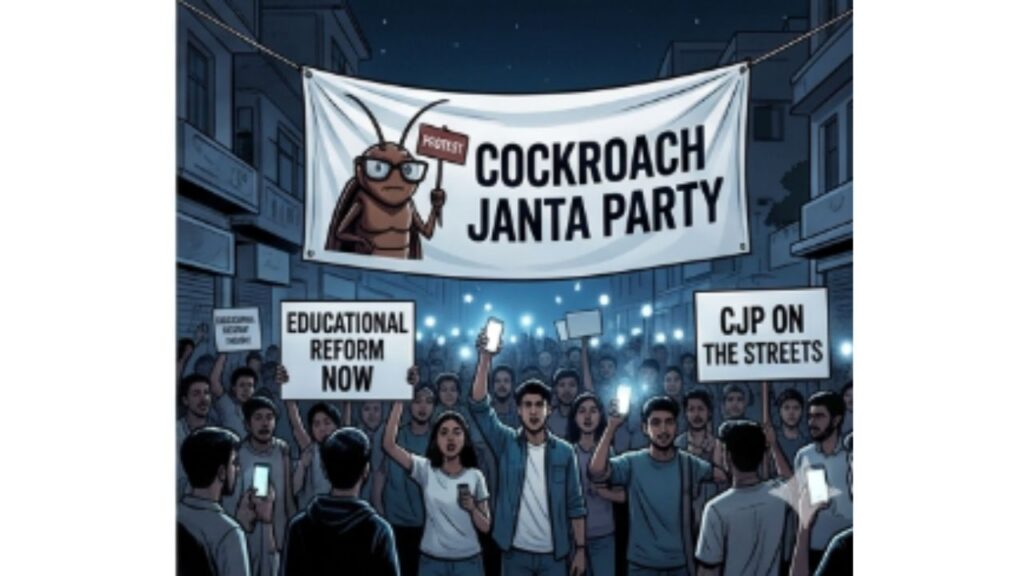
Transitioning From URL to IRL: The Jaipur Protest and Beyond
In June 2026, the Cockroach Janta Party attempted its most challenging feat: moving from the digital realm onto the streets. Founder Abhijeet Dipke returned to India to lead a series of peaceful, non-violent rallies across multiple cities. The primary demand was clear—the resignation of Education Minister Dharmendra Pradhan over the unresolved NEET examination discrepancies.
The ground reality turned volatile on June 15, 2026, during a demonstration at the Shaheed Smarak in Jaipur. While being carried on the shoulders of supporters, Dipke was physically assaulted and repeatedly slapped by unidentified individuals.
The Jaipur incident highlighted a major turning point. Observers wondering Why is It Called Cockroach Janta Party saw that the movement was no longer just an online meme space. It had evolved into a physical manifestation of youth dissent, willing to face real-world opposition to demand institutional accountability.
Intellectual and Political Backing: Embracing the Identity
What began as a student-led meme quickly gained validation from prominent civil society members, legal minds, and politicians. Renowned environmentalist and education reformer Sonam Wangchuk publicly backed the movement, famously declaring himself an “honorary cockroach” and urging the government to listen to the genuine anxieties of the youth rather than suppressing dissent.
Similarly, senior advocate and human rights activist Prashant Bhushan noted that the language used in the courtroom reflected a deep-seated institutional prejudice against activists. Political figures from various opposition parties also expressed solidarity. For these figures, understanding Why is It Called Cockroach Janta Party was key to understanding the raw, unpolished discontent of a generation that feels completely ignored by traditional political structures
Conclusion: The Lasting Legacy of the “Cockroach”
The emergence of the Cockroach Janta Party highlights a significant shift in how modern political movements are formed. It proved that in an era of near-universal smartphone access, a single tone-deaf comment from an institutional authority can instantly spark a million-strong political counter-narrative.
Ultimately, when future political scientists look back at this chapter of history and ask, “Why is It Called Cockroach Janta Party?”, the conclusion will be clear. It wasn’t named out of a desire to self-deprecate, but to weaponize an elitist insult into a unified front for survival, accountability, and reform.
Frequently Asked Questions (FAQ)
What is the Cockroach Janta Party?
The Cockroach Janta Party (CJP) is a prominent Indian satirical youth movement and digital pressure group founded in May 2026. It utilizes humor, memes, and peaceful protests to campaign against youth unemployment, educational discrepancies, and a perceived lack of institutional accountability.
Why is It Called Cockroach Janta Party?
If you want to know Why is It Called Cockroach Janta Party, it is a direct satirical response to oral remarks made during a Supreme Court hearing on May 15, 2026. An institutional comment compared certain unemployed youth, social media critics, and activists to “cockroaches.” The movement reclaimed the insult as a badge of honor and resilience.
Who founded the Cockroach Janta Party?
The movement was initiated by Abhijeet Dipke, a digital communications strategist and former political campaigner. He launched the online handles on May 16, 2026, after noticing the widespread anger surrounding the courtroom observations.
Is the Cockroach Janta Party an officially registered political party?
No. The CJP is not registered with the Election Commission of India and does not currently intend to contest elections. Its organizers define it as a satirical pressure group and a social platform dedicated to highlighting youth grievances rather than a traditional political entity.
What are the main demands of the CJP movement?
The movement focuses heavily on structural, economic, and educational reforms. Its prominent demands include transparent investigations into competitive exam systems, the creation of robust employment opportunities for young graduates, and safeguarding the constitutional right to peaceful dissent and free speech.